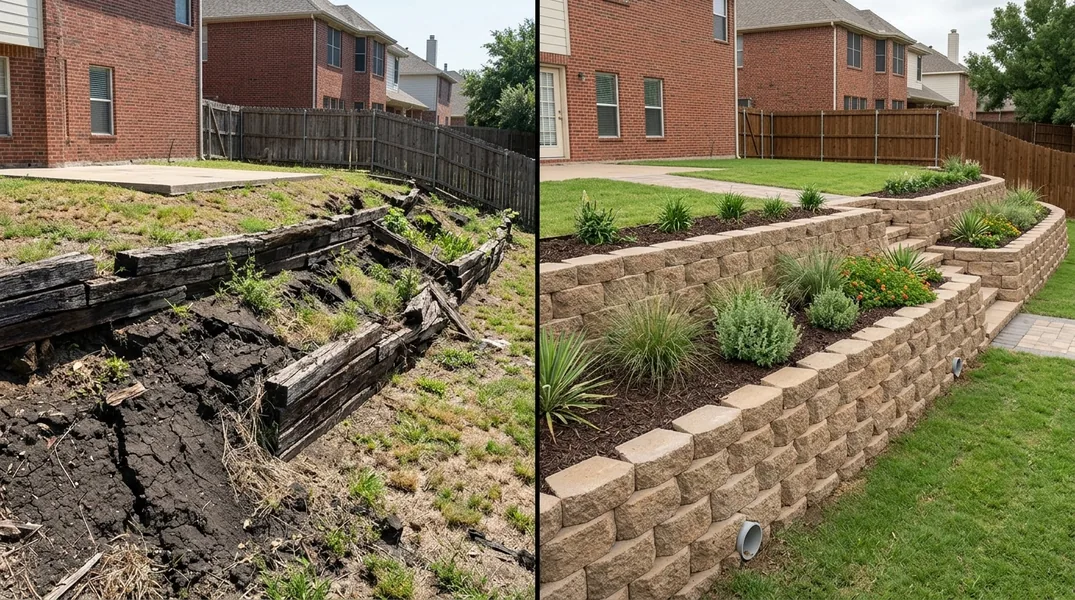
Why Plano's Spring Weather Is Tough on Retaining Walls
Spring in Plano brings a familiar pattern: weeks of heavy rain followed by sudden warm, dry stretches. That cycle is hard on any structure in the yard, but retaining walls take the brunt of it. The soil behind a wall absorbs water like a sponge during storms, then expands as it dries. When that soil is North Texas clay, the movement is significant, and a wall that was perfectly level last fall can start to lean, crack, or bulge by early summer.
Most homeowners do not think about their wall until they see a problem. By then, the damage is often already underway. Understanding what spring storms and clay swell actually do to a retaining wall is the first step toward protecting your investment. The good news is that most of the damage is preventable with the right design, the right materials, and a drainage system that actually works.
The Clay Swell Problem: What Expansive Soil Does to a Wall
The soil across much of Plano is expansive clay, which means it changes volume dramatically as its moisture content shifts. During a wet spring, clay absorbs water and swells. As summer arrives and the soil dries, it shrinks and pulls away from the wall. This constant expansion and contraction exerts enormous force on the back of a retaining wall, and it also undermines the footing that holds the wall in place. Over a few seasons, that movement can cause settlement, rotation, and structural cracks.
Clay also drains slowly. Instead of letting water pass through, it holds moisture against the wall for days after a storm. That trapped water is the root cause of most retaining wall failures in the area. A wall built without accounting for clay behavior may look fine for a year or two, then begin to show warning signs like tilting, separation at the joints, or soil washing out from around the base. If you are already seeing those signs, a professional assessment is worth scheduling before the next rainy season arrives.
Hydrostatic Pressure: The Hidden Force Behind Most Wall Failures
When water saturates the soil behind a retaining wall and cannot escape, it builds up pressure against the back of the wall. This is called hydrostatic pressure retaining wall failures are almost always tied to it. The force increases with depth, so the bottom of the wall carries the heaviest load. A wall that was engineered for dry soil can be pushed past its limits by a single week of spring storms if water has nowhere to go.
Hydrostatic pressure does not just push the wall forward. It also softens the soil under the footing, which can cause the entire structure to sink or rotate. In many cases, homeowners notice a bulge or a lean long after the pressure has been building for months. The fix is not simply to reinforce the wall. The real solution is to relieve the water pressure with proper retaining wall drainage so the soil behind the wall stays as dry as possible. Without that, even a heavily reinforced wall will eventually struggle.
How a Retaining Wall French Drain Protects Your Wall
A retaining wall french drain is the most reliable way to manage water behind a wall. The concept is straightforward: a perforated pipe runs along the base of the wall, surrounded by gravel and wrapped in filter fabric, and it carries water away from the structure to a safe discharge point. When installed correctly, it intercepts groundwater before it can build pressure and gives it a path out. This single detail often makes the difference between a wall that lasts decades and one that fails in a few years.
Drainage design also includes gravel backfill, a filter fabric barrier to keep clay from clogging the system, and weep holes that let any remaining moisture escape. On sloped lots, surface water needs to be redirected as well, often with swales or gutter extensions. If your existing wall has no drainage or the drainage has failed, Retaining Wall Repair can often restore performance by retrofitting a proper drain system. In more severe cases, Retaining Wall Replacement may be the safer choice, especially if the footing has already moved.
Choosing Materials That Handle Plano's Soil and Storms
Material choice matters when the soil is this active. Concrete Retaining Walls are popular in the area because they resist moisture damage, hold up to clay movement better than many alternatives, and require less long-term maintenance. Segmental block walls can also perform well when they are engineered for the site, but the block system, the base preparation, and the drainage all have to be right. A wall that is simply stacked without addressing water and soil will not last, regardless of what it is made of.
Proper Retaining Wall Installation starts with an honest look at the site: the slope, the soil, the water flow, and the load the wall will carry. From there, the design should specify the right footing depth, the right drainage, and the right materials for the conditions. Homeowners who want to understand what a project should involve can request a free estimate and ask specifically how drainage and clay soil will be handled. That conversation usually reveals whether a contractor understands the local conditions.
Retaining Wall Repair Near Me: When to Call a Professional
Some wall problems are cosmetic, but many are not. Hairline cracks in a concrete wall may be minor, while horizontal cracks, bulging, or a visible lean almost always point to a structural or drainage issue. Soil washing out from under the wall, water pooling behind it, or gates and fences that no longer line up are also red flags. In Plano's clay, these problems tend to get worse quickly once they start, so waiting a season or two usually means a more expensive fix later.
If you are searching for retaining wall repair near me and you are not sure whether your wall needs a repair or a full replacement, a professional inspection is the fastest way to get a clear answer. Plano Retaining Wall serves homeowners throughout the area and can evaluate the wall, explain what is happening, and recommend the most cost-effective path forward. Call (469) 661-3741 to schedule a visit, or reach out online to request a free estimate. Addressing drainage and clay movement now is the best way to protect your wall through the next round of spring storms.
Looking for a professional retaining wall contractor in Plano? Plano Retaining Wall responds fast for all your retaining wall needs.
Get a Free QuoteOur services: Retaining Wall Installation · Retaining Wall Repair · Retaining Wall Replacement