Retaining Wall Cost in Plano: What Homeowners Should Expect in 2026
If you are planning a retaining wall project in Plano, the first question is almost always about budget. For 2026, most residential retaining walls in the Plano area fall between $3,500 and $15,000, with the average project landing near $7,500. That range covers everything from a modest 30-foot garden wall to a taller, engineered structure that holds back a significant slope. The final number depends on wall height, length, material, site access, and whether drainage or permitting is required.
It helps to think in terms of square footage of wall face rather than just linear feet. A wall that is 3 feet tall and 40 feet long has 120 square feet of face, and that is the number contractors use to estimate labor and material. When you request a free estimate, a good contractor will measure the wall face, check soil conditions, and confirm whether a permit is needed before quoting a firm price. That on-site review is what separates a realistic bid from a lowball number that grows later.
Retaining Wall Cost Per Foot: Breaking Down the Numbers
Homeowners often ask for a simple per-foot figure, and while every project is different, the 2026 pricing in Plano generally runs $25 to $60 per square foot of wall face for standard materials and heights under 4 feet. Segmental block walls tend to land in the $30 to $45 range per square foot, while poured Concrete Retaining Walls often run $40 to $60 per square foot because of forming, reinforcement, and curing time. Natural stone sits at the higher end, sometimes exceeding $60 per square foot when the stone must be hand-set.
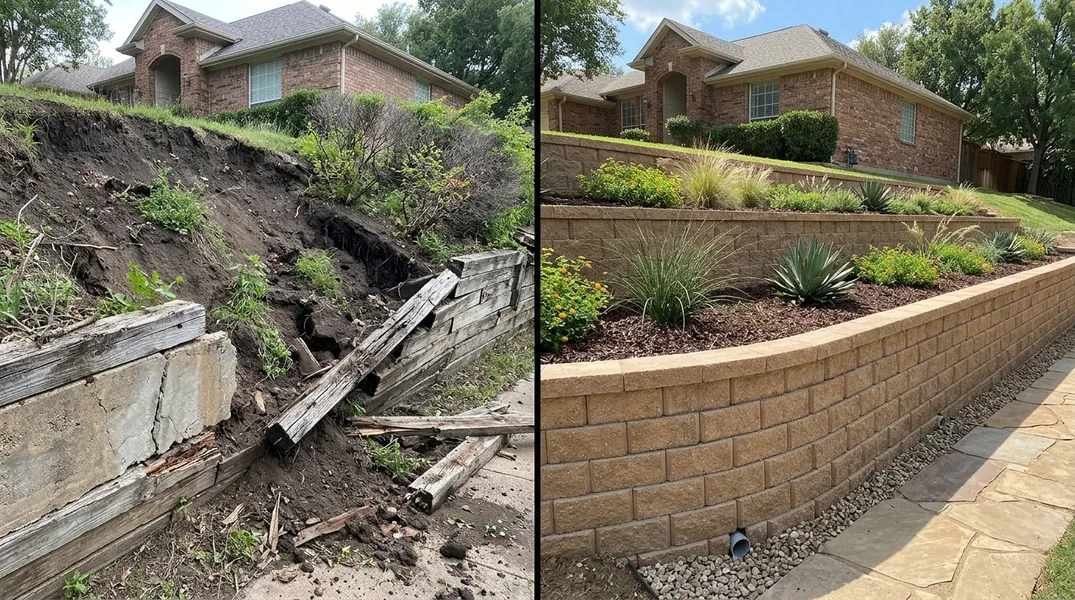
Those per-foot numbers include excavation, base gravel, the wall material, drainage aggregate, and backfill. They typically do not include permits, engineering letters, or removal of an existing wall. If your project involves Retaining Wall Replacement, expect to add $1,500 to $4,000 for demolition and haul-off, depending on the size and accessibility of the old structure. A wall that is failing and leaning may also require soil correction before the new wall goes in, which adds cost but protects the investment.
What Drives the Cost of a Retaining Wall in Plano
Height is the single biggest cost driver. Walls under 4 feet are relatively straightforward and often do not require engineering. Once a wall exceeds 4 feet, many North Texas municipalities require a permit and stamped engineering plans, which can add $500 to $2,000 to the project. Plano sits on expansive clay soils that shift with moisture, so proper base preparation and drainage are not optional. A contractor who skips a gravel base or weep holes may save you money upfront but cost you far more when the wall cracks or leans within a few seasons.
Site access also matters. A wall in a tight side yard where equipment cannot reach will require more hand labor, which raises the price. So will steep slopes, tree roots, and utilities running through the excavation area. Material choice rounds out the list: block is the most common and cost-effective, concrete offers a clean modern look and long lifespan, and natural stone delivers the best curb appeal at a premium. If you are comparing bids in Frisco or Allen, the same factors apply, and local soil conditions are nearly identical across the region.
Retaining Wall Installation Near Me: When to Call a Professional
A low garden wall under 2 feet can sometimes be a DIY weekend project, but anything taller, longer, or load-bearing should be handled by a professional. Retaining walls hold back thousands of pounds of soil and water pressure. When they fail, they can damage fences, patios, pool decks, and even foundations. Professional Retaining Wall Installation includes proper excavation, compacted base, drainage stone, geogrid reinforcement where needed, and correct backfill, all of which are hard to replicate without experience and equipment.
Call a pro if you notice bowing, leaning, cracking, or soil washing out from behind an existing wall. Those are signs that Retaining Wall Repair is needed before the problem spreads. A reputable contractor will also tell you honestly when a wall can be repaired versus when replacement is the smarter long-term choice. In a market like McKinney, where lots often slope toward the street, getting the drainage right the first time is what keeps a wall standing for decades.
How to Budget for Your Retaining Wall Project
Start by setting a realistic range based on the wall face area and material you want. Add a 10 to 15 percent contingency for surprises like hidden roots, old footings, or utility conflicts. If your wall will exceed 4 feet, budget for a permit and possibly an engineer's letter. It is also wise to ask whether the quote includes hauling away excavated soil, since disposal fees in the Plano area can add several hundred dollars to a job if they are not itemized.
Get at least two written estimates and compare what is included, not just the bottom line. A bid that is $2,000 cheaper but omits drainage stone or compaction is not actually a better deal. Ask how long the contractor has been building walls in the area, whether they carry insurance, and what kind of warranty they offer on workmanship. When you are ready to talk numbers, call Plano Retaining Wall at (469) 661-3741 or request a free estimate and get a clear, itemized price for your specific project.
Looking for a professional retaining wall contractor in Plano? Plano Retaining Wall responds fast for all your retaining wall needs.
Get a Free QuoteOur services: Retaining Wall Installation · Retaining Wall Repair · Retaining Wall Replacement